
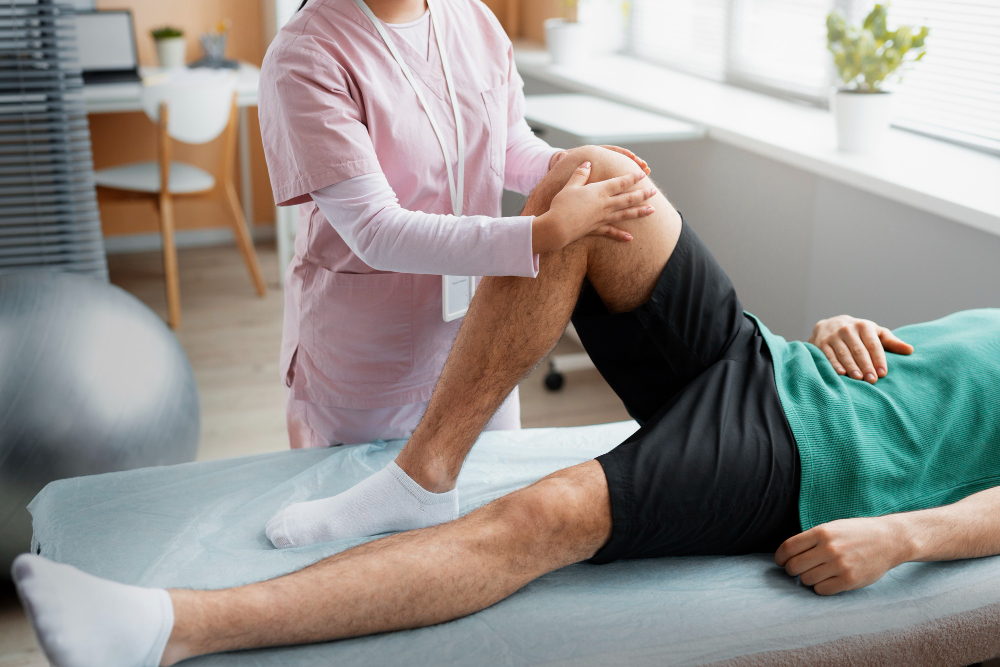
Knee replacement surgery, also called total knee replacement (TKR), can help people walk and move with less pain. However, rehabilitation in knee (TKR) replacements is just as important as the surgery itself. In fact, knee replacement recovery depends on proper physiotherapy after TKR and post-surgery knee rehab. With the right rehab plan, you can regain strength, improve movement, and return to daily activities faster.
What is Knee (TKR) Replacement?
Knee replacement, or total knee replacement (TKR), is a surgery where a damaged knee joint is replaced with an artificial one. Usually, doctors suggest this surgery when knee pain or stiffness makes walking or daily tasks hard. The new joint helps reduce pain and improve movement. After surgery, most people need help to get used to their new knee. That is where rehabilitation comes in.
Why is Rehabilitation Important After TKR?
Rehabilitation is the process of helping your body heal and adjust after surgery. Without proper rehab, your knee may stay stiff or weak. As a result, you might not get the full benefit of your new knee. Rehabilitation in knee (TKR) replacements helps you:
Therefore, starting rehab early and following your plan is key to a good recovery.
Stages of Rehabilitation After Knee Replacement
Rehabilitation after knee replacement happens in steps. Each stage has its own goals and activities. Here is what you can expect:
Each stage is important for your overall recovery.
Common Rehabilitation Techniques and Exercises
Rehabilitation in knee (TKR) replacements uses many techniques. Your physiotherapist will choose the best ones for you. Some common rehab methods include:
For example, you may start with ankle pumps and straight leg raises. Later, you might do step-ups or gentle squats. Always follow your therapist’s advice for safety.
Benefits of Physiotherapy in TKR Recovery
Physiotherapy is a key part of knee replacement recovery. With regular sessions, you can:
According to the World Health Organization (WHO), early and ongoing rehab leads to better results after joint surgery. Therefore, do not skip your therapy sessions.
Tips for a Successful Rehabilitation Journey
To get the most from rehabilitation in knee (TKR) replacements, try these tips:
Sometimes, recovery can feel slow. However, steady effort brings good results over time.
Prevention of Complications Through Rehab
Rehabilitation does more than help you move better. It also prevents problems after surgery. For instance, regular movement lowers the risk of blood clots. Good exercises keep your knee from getting too stiff. In addition, learning safe ways to walk helps you avoid falls. By following your rehab plan, you protect your new knee and your health.
In summary, rehabilitation in knee (TKR) replacements is vital for a smooth and safe recovery. If you or a loved one has had knee replacement surgery, consult a physiotherapist at Sreeansh Physiotherapy and Rehabilitation Centre or a rehabilitation specialist for personalized recovery guidance after knee replacement.